What is the best house alarm system for you?
With 28% of Irish people reported to have been a previous victim of a break-in, people are becoming more security conscious and looking to secure their home with a house alarm. However, what is the best house alarm system for you? There are wired, wireless, monitored and non-monitored alarms. We breakdown the benefits of each to help find the best alarm for you.
What to compare before you choose
Five things separate one system from another, and the panel is only the first of them.
Alarm panels
You may think that all alarm panels on the Irish market are the same, but be sure to ask what features the panel has. With HomeSecure’s latest alarm KeyPad, you get a Stay and Away function. The Away mode is your standard, arm all sensors setting, which is ideal when your home is empty.
Our Stay function is extremely useful, for home’s set up with perimeter protection. This function solely arms your perimeter sensors. With the majority of Irish break-ins actually occurring between 5pm – 11pm, the Stay button is vital to any home’s security and can deter someone from trying to gain access to your home.
Our house alarm system also comes with emergency panic buttons, which can be used if you require the Fire Brigade, Gardaí or an Ambulance, so you’re getting the fastest response in any urgent situation. Once again though, not all alarm panels will have the same features, so make sure to investigate.
Sensor flexibility
Some providers sell a fixed pack. Others let you decide how many door contacts, window contacts and motion sensors your layout needs. A fixed pack is simpler to price but tends to over-sensor small homes and under-sensor larger ones.
What happens when it activates
This is the real dividing line, and it is covered in full below. A siren-only system relies on somebody nearby hearing it. A monitored system puts a person on the other end of the activation.
What is included after installation
Servicing, faults, battery replacement and call-outs are either included in a monthly fee or charged each time. Over five years this usually matters more than the upfront difference.
App control and alerts
Arming and disarming from a phone, timestamped activity logs and alerts if you leave the house without setting the alarm are now standard rather than premium. Check they are included rather than an upgrade.
How do I choose what sensors I need?
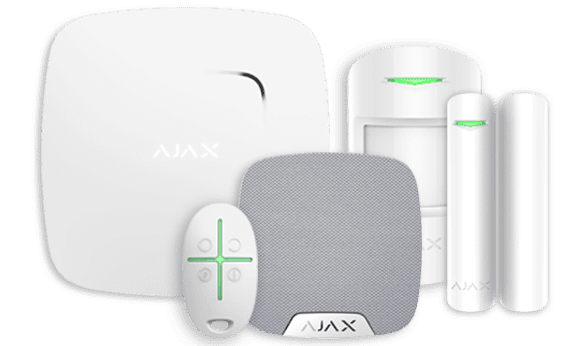
There are many ways to secure your home. As your doors are the most common entry points for burglars, you should always put a sensor on your perimeter doors. Over half of all burglars will enter through a front, back or side door; so securing these is critical.
The Gardaí do require at least one motion / internal sensor to help verify break-ins, but after that, it’s really up to you on how you want to secure your home.
You can choose to add a sensor to all of your windows, some of your windows or none at all. It’s recommended to protect vulnerable windows, such as ones at the back of your home and ones that can be easily accessed from a slanted roof or garage. Not all companies offer the same level of flexibility, a lot will offer a ‘one-size fits all’ pack. Make sure you get the home security that gives you and your family peace of mind.
Remember that burglars don’t carry ladders, so you don’t have to put a sensor on every window, you can always use a motion sensor to cover a whole room and a series of windows.
It does depend on what type of house you do have. If you have a bungalow, it’s recommend to go for a more motion-based burglar alarm setup.
You can always get guidance over the phone from the sales team and on the day of an installation, the engineer will give his professional recommendation on what needs to be covered. HomeSecure engineers will ask you a series of questions to help set up the sensors in a way that works for you and your family.
What alarm system suits your type of home
Terraced house
A terraced house usually has the fewest ways in: a front door, a back door and rear windows. Sensors on both doors plus one motion sensor covering the hall or stairs will address most of the risk. Party walls do not need protecting, so a terraced home typically needs the smallest sensor count of any house type.
Semi-detached house
A semi-detached home adds a side passage, a side gate and side-facing windows. Cover the front and back doors, the side door if there is one, and use a motion sensor in the hall. Rear windows reachable from a flat roof, extension or garage roof are worth a contact sensor of their own.
Detached and larger homes
Detached homes have accessible windows on all four elevations and often a garage or outbuilding. Covering whole rooms with motion sensors is more practical than fitting a contact to every window. Larger properties need more sensors overall, which is where a system you can scale matters more than a fixed pack.
Bungalow
Every room in a bungalow is at ground level, so every window is reachable. A motion-led setup works better here than window-by-window contacts. Cover the main rooms with motion sensors and protect all external doors.
Apartment
Most apartments are covered by a sensor on the entrance door, contacts on any accessible windows or balcony doors, and one motion sensor in the main living space. Wireless systems suit rented apartments in particular, because there is minimal drilling and the equipment can be removed at the end of a tenancy.
Holiday home or second property
A property that sits empty for weeks needs monitoring more than an occupied home does, because there is nobody nearby to hear a siren. Look for app alerts, a daily health check confirming the system is still online, and a monitoring centre that can act while you are hours away. Our full guide to securing a holiday home covers keyholders, seasonal arming and leak and fire risk in an empty property.
A home where someone lives alone
For someone living alone, or for an older relative’s home, the priority shifts from perimeter cover to raising an alarm quickly. Being able to arm the perimeter while the house is occupied, and having a way to call for help from any room, matters more than a high sensor count.
Monitored vs non-monitored House Alarm Systems
An age-old question when it comes to home alarms, is whether or not to get it monitored. If an alarm isn’t monitored, the external bell will ring for up to 15 minutes once the alarm has been activated. A non-monitored house alarm system will have a bigger upfront fee, usually €800 – €1,000 for a good standard one.
A monitored alarm that has a verified break-in can alert the Gardaí and with HomeSecure, the nearest mobile unit will be dispatched to your home. The upfront cost on monitored alarms is usually lower and the fee is spread out over a number of years with your monitoring costs.
Burglars are savvy to monitored alarm companies and know not to even approach these houses, as they have the best protection. A monitored home is proven to be three more safer than a non-monitored home.
Self-monitored vs monitoring station
A self-monitored system sends an alert to your phone. A monitored system sends the activation to a staffed monitoring centre. The practical difference is who is responsible for acting on it, and whether a Garda response can be requested.
| Self-monitored | Professionally monitored | |
|---|---|---|
| Who responds | You, if you see the alert | A staffed centre, 24 hours a day |
| Garda response | Cannot verify an activation alone | Can request a response on a verified activation |
| If you are asleep or at work | No response until you look | Response continues without you |
| Upfront cost | Higher, bought outright | Lower installation fee |
| Ongoing cost | None, but call-outs and repairs are charged | Monthly fee, usually including servicing |
| Best suited to | An occupied home with someone usually nearby | Empty homes, holiday homes, and anyone wanting a response they do not have to make |

There are options to have a self-monitored alarm or have your alarm monitored by a monitoring station. Let us explain the main differences.
A self-monitored house alarm system works as a text service. This means when your alarm has been activated you can get a text message. One benefit of this is, it’s a cheaper way to monitor your home. The main disadvantage here, is you don’t have a guaranteed Garda response. As of January 2008, the Gardaí can only guarantee to respond to houses when there has been a verified break-in. Receiving a text isn’t a verified break-in, as you have no way of knowing if it is a false alarm or not. Another disadvantage is, it requires you to respond. If you are at work and not looking at your phone, a text is pretty much useless.
Having your alarm monitored by a monitoring station is generally the more expensive option, but you do receive round the clock protection. Here if your alarm is activated, the monitoring station will call your designated keyholders to confirm if you are okay. If your keyholders don’t answer, if you confirm nobody is home or if a perimeter and internal sensor are triggered, the monitoring station can dispatch the Gardaí immediately, as this is treated as a verified break-in. Unlike the text service, you’ll have full-time staff dedicated to your home’s security.
If you want to weigh this up in detail, the full comparison is set out in our guide to monitored and unmonitored alarm systems.
Conclusion
Most homes do not need the largest system available. They need every door covered, one motion sensor for verification, and a response that does not depend on somebody being awake and looking at a phone. Once those three are in place, the differences between providers come down to what is included afterwards and what it costs each month.
With your home being the biggest asset you will ever own, it is critical to give it the protection it deserves. Although there are cheaper options, we recommend getting a monitored alarm.
With most self-monitored house alarm systems, you may have to pay for call out fees, if you are getting your alarm serviced or repaired, so although it may seem like a cheaper option, there are more hidden costs here. With many monitored companies including HomeSecure, your maintenance fees are included in your monthly fee.
At HomeSecure we have made house alarms more affordable, by offering monitored alarms from just €49! With our monthly fee, you will receive 24/7 monitoring, an annual service and you’re covered for unlimited call-outs, if you have any technical issues with the alarm.
For more information call 01 920 3787
Independent Research carried out by Accuracy Research on behalf of HomeSecure. Results based on 1,008 respondents and are nationally representative. Additional security stats taken from on Garda Siochana website site and other industry sources
Frequently asked questions
What features should I look for when choosing a home security system in Ireland?
Check five things: whether the panel offers both a Stay and an Away mode, whether you can choose your own sensor mix rather than take a fixed pack, what happens when the alarm activates, what is included after installation, and whether app control and alerts come as standard. The response question matters most, because it determines whether anyone acts on an activation when you are not looking at your phone.
What alarm system suits a semi-detached house?
A semi-detached house usually needs sensors on the front and back doors, the side door if there is one, and a motion sensor in the hall. Add contact sensors to any rear windows that can be reached from a flat roof, extension or garage. Party walls do not need cover. A HomeSecure security advisor can assess your home and confirm what needs covering before installation.
What alarm system suits a large or detached house?
Detached and larger homes have accessible windows on every elevation, so covering whole rooms with motion sensors is more practical than fitting a contact to each window. Outbuildings and garages should be considered separately. A system you can add to over time suits a larger property better than a fixed pack.
What kind of alarm suits a holiday home?
A property left empty needs monitoring more than an occupied one, because there is nobody nearby to hear a siren. Look for professional monitoring, app alerts, and a daily health check confirming the system is still online. Water leak and smoke detection are worth adding, since either can go unnoticed for days in an empty house.
Is a monitored alarm better than a self-monitored one?
They do different jobs. A self-monitored system alerts you and relies on you acting. A monitored system sends the activation to a staffed centre that contacts your keyholders and can request a Garda response on a verified activation.
Does the alarm company call the Gardaí?
A monitoring centre can request a Garda response when an activation has been verified. Verification usually means more than one sensor triggering, or the centre establishing with your keyholders that the property should be empty. A self-monitored system cannot produce a verified activation on its own, so it cannot trigger a Garda response.
How much does a house alarm cost in Ireland?
An unmonitored system is bought outright, typically €500 to €800 for basic hardware, with servicing and call-outs charged as they arise. A monitored system has a lower installation fee and a monthly charge that usually includes servicing and battery replacement. HomeSecure installs from €49 with monitoring from €0.99 per day.